

In 2002, I wrote a business plan to start a technology company in the fastest growing market in America. It was one of the most comprehensive documents I have ever developed. It covered market trends, emerging technology, market demographics, competitive analysis, financial projections, a SWOT analysis and a roadmap to replicate the plan across a larger geographical region. An SBA adviser to Wells Fargo said it was one of the best plans he had reviewed in 30 years. I was very proud and excited to start building my empire. So we started the company, implemented the plan and ran strong for seven years, then everything changed.
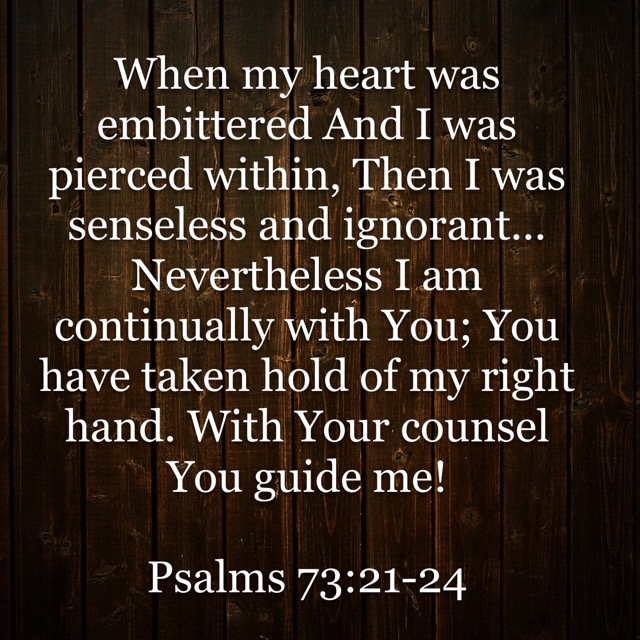 The Providence of God is one of the essential doctrines of the Christian faith for without it we would be left to question the nature of God, His omniscience, omnipotence, omnipresence, and His Sovereignty. If we were to remove this key doctrine, much of the Christian faith would not make sense, yet paradoxically it is also the Hand of Providence that can often leave us wondering why things don’t make sense.
I have always been one to plan things out. Whenever there is a task at hand or a goal to achieve, I have a plan and a contingency plan. If you are like me, you leave nothing to chance. This ability to plan, anticipate change, recognize trends and know when to shift gears has served me well in business, but what do you do when your well researched plans begin to unravel? Sometimes when things do not go as planned, fear sets in and people instinctively panic, even people of faith. It is in these critical moments that we need to talk to God, be honest with God, and go deep into His word. As I reflect on many changes in my life over the last 7 years, I realized great comfort in the truth that God does not leave anything to chance either. While we make our plans, God sovereignly rules and sometimes overrules our plans (Proverbs 16:2,9) as He leads us in the process to become holy (Ephesians 1:4) and conformed to the image of Jesus (Romans 8:29).
As plans unraveled and contingency planning would not stop the rising waters, God was making it clear that His purpose had been accomplished for that season of my life and pruning had begun. Of course it was hard to recognize in the midst of it because my focus was on my plans, not His plan. How can this be, we still have much to do? We’ve done so well, won awards, the guy said we can’t miss! What will people think? what of my reputation? how do I save face? Reflecting on that time through extended time in Word and prayer, I see how that company had become an Idol of my heart as my focus went horizontal rather than having a vertical focus to fuel a more fruitful horizontal life. To the world, I probably looked like a good Christian, going to church, giving, volunteering, fulfilling all of my Christian duties and I probably would have argued that I was doing good. But man looks at the outward appearance and God looks at the heart. Only God could see that my heart was swollen with pride for I had put my kingdom first rather than the kingdom of God, so God blew it all away (Haggai 1:1-10).
13 Come now, you who say, “Today or tomorrow we will go to such and such a city, and spend a year there and engage in business and make a profit.” 14 Yet you do not know what your life will be like tomorrow. You are just a vapor that appears for a little while and then vanishes away. 15 Instead, you ought to say, “If the Lord wills, we will live and also do this or that.”
James 4:13-15
As God’s plan was unfolding in a way much different than I had planned, there were a lot of reactions, a lot of emotions and a lot of wasted energy. Though we believe that God has planned out all of our days before any of them ever occurred (Psalm 139:16) and we believe that His plans for us are good (Jeremiah 29:11), we still need a stronger faith and a deeper awareness of Gods presence when that good comes from bad, when darkness precedes the dawn, when life comes through death; you must go to the grave before you can be resurrected.
How else can we be conformed to the image of His Son (Romans 8:29) if we do not have trials to test our faith (Romans 8:35), which lead us to greater dependence on God so we can die to self (Romans 8:36) and confidently live a victorious life, firm in God’s love (Romans 8:37-39) with peace that transcends all understanding (Philippians 4:7), the peace of God through Jesus that is completely agnostic to circumstances of life (John 14:27).
It was a humbling experience because I have never been a fearful man for that would be to admit weakness. As my will would come face to face with God’s will, my sin was serving up the bitter cocktail of stubbornness, pride and fear, a vomitous drink that fights the call to surrender. In this rendition of my faith, The Lord was taking me to a new place to demonstrate that His strength is perfected in weakness (2Cor. 12:9), and of course me being me, I would choose the long way on this part of my journey. Ultimately, this would become a time to stop rationalizing, a time to stop trying to reattach leaves to the branch and live out the season of pruning for His purpose. Everything that has happened in our lives, is not an accident, but orchestrated after the counsel of His will (Ephesians 1:3-12). At the time, I knew that intellectually, but later I would see that deep, personal, life changing belief in God’s providence would come after these first steps on the pathway to brokenness (Matthew 5:3).


Leave a Reply