

4 I enlarged my works: I built houses for myself, I planted vineyards for myself; 5 I made gardens and parks for myself, and I planted in them all kinds of fruit trees; 6 I made ponds of water for myself from which to irrigate a forest of growing trees. 7 I bought male and female slaves, and I had slaves born at home. I also possessed flocks and herds larger than all who preceded me in Jerusalem. 8 I also amassed for myself silver and gold, and the treasure of kings and provinces. I provided for myself male and female singers, and the pleasures of the sons of mankind: many concubines.
9 Then I became great and increased more than all who preceded me in Jerusalem. My wisdom also stood by me. 10 All that my eyes desired, I did not refuse them. I did not restrain my heart from any pleasure, for my heart was pleased because of all my labor; and this was my reward for all my labor. 11 So I considered all my activities which my hands had done and the labor which I had exerted, and behold, all was futility and striving after wind, and there was no benefit under the sun. – Ecclesiastes 2:4-11
When Jesus said that you cannot serve God and wealth, or you will end up loving one and despising the other, He was providing a framework for our entire lives with an implied question. The questions that we should ask ourselves is, “are we building our own kingdom?” or “are we building the kingdom of God?” The answer to this question will shape our entire life because the answer to this question reveals which God we worship. When Jesus pits God and wealth against each other, He is not saying that wealth is bad, but rather He is calling attention to where we place our faith. We know from the scriptures that all money belongs to the Lord (2Chronicles 29:10-20), we know that God is the One who has given us the ability to create wealth (Deuteronomy 8:11-18), and we are also told that everything that we have acquired with our wealth belongs to God (Psalm 24:1), so Jesus is not condemning wealth, but rather calling us to keep it in perspective so that our blessings do not become idols. Paul also calls attention to the problem of wealth when he wrote to Timothy and said to instruct the wealthy to place their hope in God and to be generous with their wealth and rich in good works (1Timothy 6:17-19). The importance of calling this out is because where we place our faith determines where we place our trust, and where we place our trust determines where we spend eternity. This question of kingdom, faith and trust is one of eternal significance because the answer shows us our true identity. Not the identity we claim when we tell people we are Christian, but rather the identity that God sees in the dark corners of our heart where our motives and desires reside. What we desire, what motivates us, what breaks our heart, what causes us to rejoice, and what we hope for are all indicators that reveal which kingdom we are putting first (Matthew 6:33).
 When we consider the eternal significance of putting the kingdom of God first, we must look at Luke 16. Jesus told us the story of the rich man and Lazarus in Luke 16 where we see a clear picture of a man who worshipped God and a man who worshipped wealth. This is a short, but significant story that we should know when it comes to the question of identity. In the story we see that Lazarus has received comfort, but more importantly Lazarus is called by name, a sign that he had embraced his eternal identity in this life and worshipped God. The rich man does not have a name, but is identified by the god he worshipped, his riches. Since the rich man worshipped what was temporary, his identity was temporary, and now we see in eternity that he is perishing because his god also perished. This is not the case for the Christian who is marked by our identity in Christ, and therefore we will retain our identity for all eternity with Christ. As believers, we have a relationship with the living God (John 10:27-28) and it is the Spirit of God that leads us and speaks to us affirming that we are heirs of God adopted into His family (Romans 8:14-17).
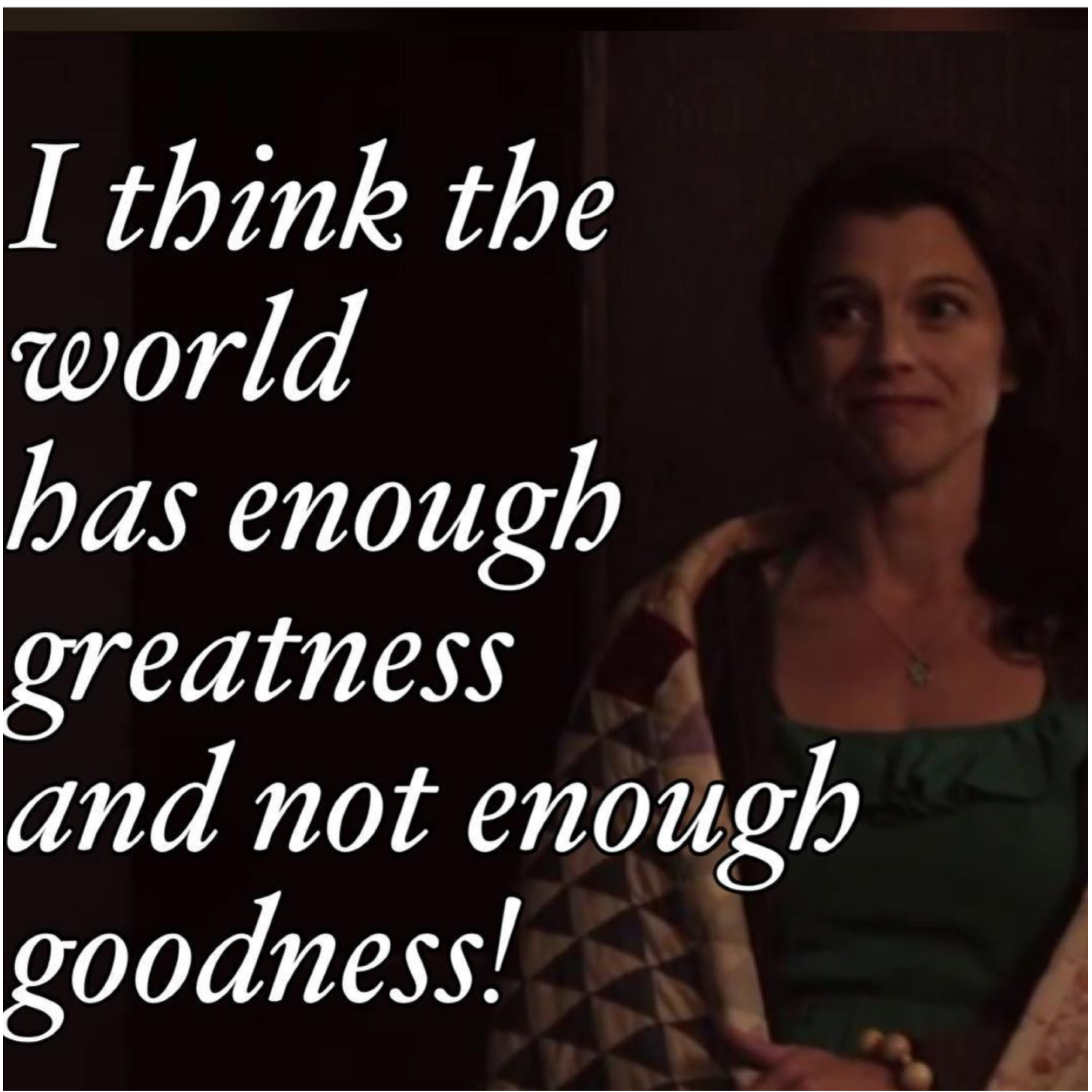
The question of which kingdom we are putting first to build, can also be understood as the pursuit of greatness or a pursuit of goodness. In Ecclesiastes 2:4-11, Solomon stated that the pursuit of greatness was all about building everything “for myself.” Contrast that with Paul writing to Timothy instructing those who are wealthy to be generous and rich in good works. What is important to understand is that the key difference in the pursuit of greatness and the pursuit of goodness is the condition of our hearts. Two people can look very similar in their accomplishments and their possessions to a certain degree, but it is their attitude towards those possessions that determines the kingdom that we are building. Both people may appear great and successful in the eyes of the world, but the person seeking greatness is fully invested in what we know is going to fade. This leads to a discontent heart because the eternity that God has placed in our hearts can never be filled by what is temporary. In contrast, the pursuit of goodness is a pursuit of a fruit of the Spirit, a trait of Christian character identified in Galatians 5:22. We must note that goodness is not a measure of morality, but correctly understood, goodness is a virtue of benevolence, a disposition of the soul that is cultivated as Christ is formed in us. In Ephesians 5:8-10, Paul provides more insight into goodness as he identifies Christians as children of Light who are to exhibit this identity in how we live (v.8) which is characterized as goodness (expressed as being charitable), righteousness (which is expressed as kindness and graciousness indicating a heart right with God), and truth (v.9) in our seeking to be pleasing to the Lord (v.10). We see here that truth is central to a heart right with God that manifests the fruit of the Spirit. Truth is central because Jesus is the truth (John 14:6), the Holy Spirit is the truth (John 14:17), and the Bible is the truth (John 17:17), all of which produce true worshippers who worship in Spirit and Truth (John 4:23-24).
In summary, the reason this is a heart question is because the pursuit of greatness is “me” focused and the pursuit of goodness is “other” focused. Every person is seeking to build a kingdom, either their own or Gods. If we are “me” focused, then we operate by the vice of pride as fuel for the pursuit of greatness. If we are “others” focused, then we operate by the virtue of humility that fuels our pursuit of goodness. Where we all start out in the pursuit of happiness to build our kingdom, some will hear the call of God, respond by faith, put on Christ, and pursue the kingdom of God. In Matthew 6:25-34, Jesus tells us to seek His kingdom first, and everything else we are pursuing will be added to us. There is a mystery to what occurs in this process, because it is this pursuit of God as our first Love that actually transforms our hearts in a way that our old desires fade away and we grow new desires that lead us on our journey to grow up in Christ. This is what the psalmist was referring to in Psalm 37, where we are advised to place our trust in God and seek goodness (v.3), find our joy in the Lord and He will give us the desires of our heart (v.4), walk with Him daily in a trusting manner (v.5) and He will grow in us His righteousness that we show ourselves to be children of Light (v.6). In this process, the desire of our hearts are conformed to what God desires us to be, and our will is aligned with His will. This is why we cannot serve God and wealth. The affection for either one requires a different nature and a different heart, the two are at odds with each other. That is why any attempt to seek both will lead to despising one and loving the other. Like light and dark cannot co-exist and cannot occupy the same space, so a choice must be made. C.S. Lewis summarized this brilliantly in his book, ‘Mere Christianity’, when he wrote, “aim at heaven and you will get Earth thrown in; aim at Earth and you will get neither.”
Prayer: Eternal God, heavenly Father, you have graciously accepted us as living members of your Son our Savior Jesus Christ, and you have fed us with spiritual food in the Sacrament of His Body and Blood. Send us now into the world in peace and grant us strength and courage to love and serve you with gladness and singleness of heart, through Christ our Lord. Amen!
(Photo and quote from the Christian film, ‘Old Fashioned’)
 Visceral Reflections
Leave a comment