

31 And He began to teach them that the Son of Man must suffer many things and be rejected by the elders and the chief priests and the scribes, and be killed, and after three days rise again. 32 And He was stating the matter plainly. And Peter took Him aside and began to rebuke Him. 33 But turning around and seeing His disciples, He rebuked Peter and *said, “Get behind Me, Satan; for you are not setting your mind on God’s interests, but man’s.” 34 And He summoned the crowd with His disciples, and said to them, “If anyone wishes to come after Me, he must deny himself, and take up his cross and follow Me. 35 For whoever wishes to save his life will lose it, but whoever loses his life for My sake and the gospel’s will save it.36 For what does it profit a man to gain the whole world, and forfeit his soul? 37 For what will a man give in exchange for his soul? 38 For whoever is ashamed of Me and My words in this adulterous and sinful generation, the Son of Man will also be ashamed of him when He comes in the glory of His Father with the holy angels.” – Mark 8:31-38
When I first became a believer, I recall having a conversation with my roommate about Good Friday. When I shared with him the meaning of Good Friday, he replied, “it doesn’t sound like Jesus had a very good day.” Even though he was trying to mock the gospel and my faith, his statement got me thinking about the deep goodness about today that will always go unnoticed to anyone who has not been called into the Kingdom. In looking at Mark 8 above, the first thing that jumps out at me is that Jesus was not only called to suffer, but it was a necessity to be rejected. Have you ever considered why rejection was necessary? Jesus came to Earth with a mission! His mission was the redemption of mankind, to bridge the gap that separated us from God and the Kingdom of Heaven. One of the very first indications of His mission was receiving The Gift of Myrrh from the wise men. I won’t rehash it here, but you can link to my previous post about the gift that is presented at the birth of Jesus, but appropriately missing at the Second Advent and the establishment of the Millennial Kingdom (Isaiah 60).
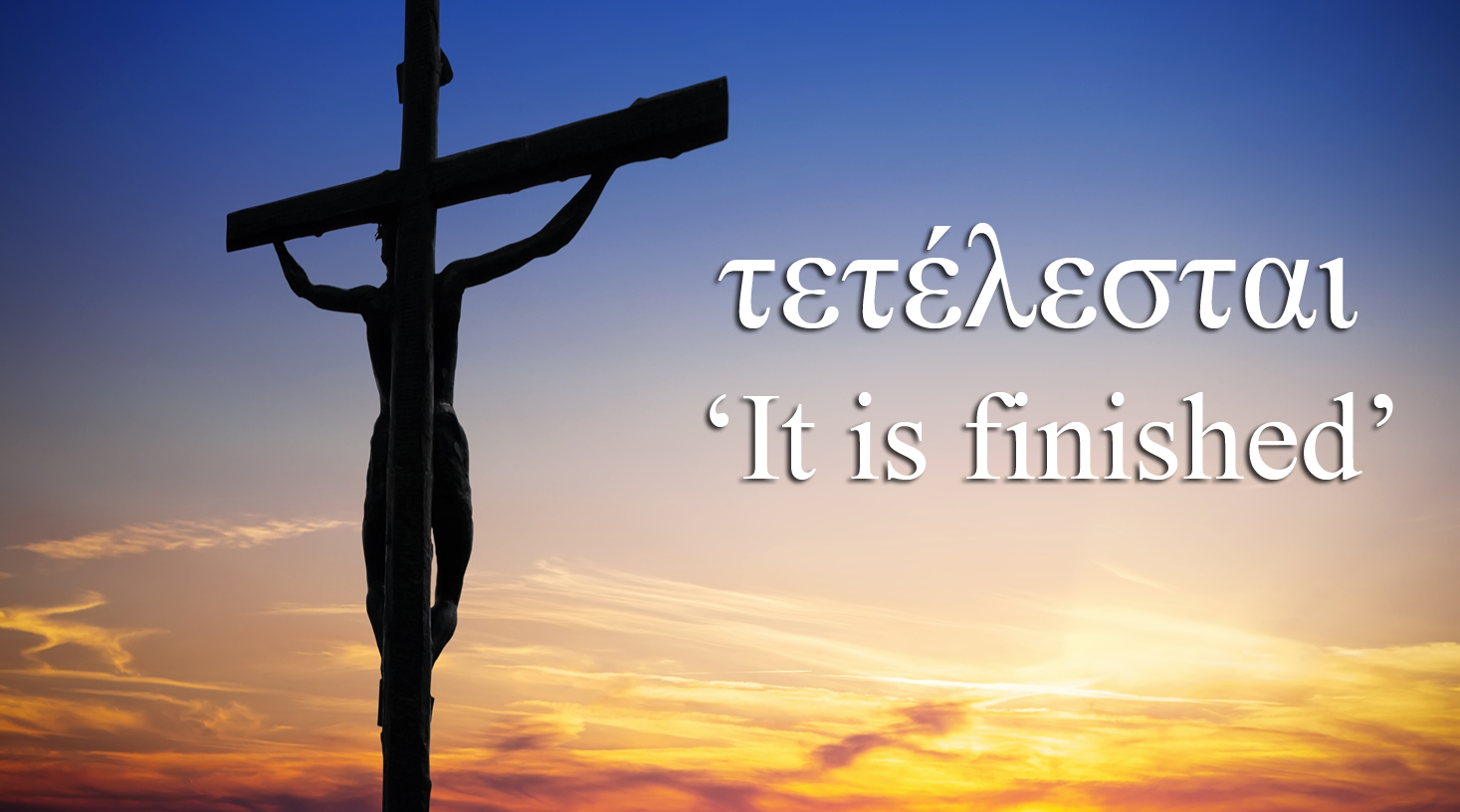
When we talk about suffering for beliefs, that is actually quite common in our world. Many have given their lives for their beliefs over the centuries, whether those beliefs were for faith, politics, social injustice or some other cause. What is common to just about all of them is that they are largely forgotten. For a time, people will gossip about it, call it a tragedy, some may mourn, but the result is that those people are eventually forgotten when the social capital is exhausted. If Jesus had not been rejected, people would have treated Him the same way, feeling sympathy for him, and reduced Him to martyr status, labeled a tragedy. That indeed would have been a tragedy, but praise God for His wisdom and the staying power of rejection! Because not only would martyrdom have been the reflection of history, but the awaited Messiah would have come and gone unnoticed leaving the world without the hope of redemption. If the murder of Jesus had not come about as the result of rejection, even the disciples who walked with Him would have missed the mark (see John 12:33-37). Consider the actions of Peter in Mark 8:33 and the response of Jesus. Peter was the leader, so he took Jesus aside to express what they all believed. The disciples along with most Jews of the time were seeking a political Messiah to over throw Rome and establish the reign of Israel in this world. Jesus said, “My Kingdom is not of this world, it were, then would my servants fight.” No, Jesus came to save us and the only way was to surrender to the suffering and rejection required to reconcile us to Himself (Romans 5:8) that we might be called children of God (John 1:12; Matthew 18:3).
The Garden of Gethsemane
39 And He went a little beyond them, and fell on His face and prayed, saying, “My Father, if it is possible, let this cup pass from Me; yet not as I will, but as You will.” 40 And He *came to the disciples and *found them sleeping, and *said to Peter, “So, you men could not keep watch with Me for one hour? 41 Keep watching and praying that you may not enter into temptation; the spirit is willing, but the flesh is weak.”
42 He went away again a second time and prayed, saying, “My Father, if this cannot pass away unless I drink it, Your will be done.” 43 Again He came and found them sleeping, for their eyes were heavy. 44 And He left them again, and went away and prayed a third time, saying the same thing once more. 45 Then He *came to the disciples and *said to them, “Are you still sleeping and resting? Behold, the hour is at hand and the Son of Man is being betrayed into the hands of sinners. 46 Get up, let us be going; behold, the one who betrays Me is at hand!”
41 And He withdrew from them about a stone’s throw, and He knelt down and began to pray, 42 saying, “Father, if You are willing, remove this cup from Me; yet not My will, but Yours be done.” 43 Now an angel from heaven appeared to Him, strengthening Him. 44 And being in agony He was praying very fervently; and His sweat became like drops of blood, falling down upon the ground. – Luke 22:41-44
Jesus was not a martyr to be remembered in human sentimentality. He was rejected by the world in the final act of redemption in the battle of light and darkness. The anguish of His soul in the garden was not the sorrow of man, but rather it was the weight of sin pressing down on the Man who was God incarnate reconciling the world to Himself. He was fully God and fully man, therefore this unique agony could only fall on Him. We are fully human growing to be like Christ in our inner man so the Holy Spirit in us shows us the grief of our sin (John 16:8) as an act of love as He also affirms our new nature makes us children of God (Romans 8:15-16). As we walk with God, we have a growing conviction to become less as He becomes more (John 3:30; Romans 8:29). Because God has set eternity in the hearts of man (Ecclesiastes 3:11), those of us who are born-again accept this holy invitation to connect to God (John 15:1-5), quench the thirst of our hearts (John 7:37-38) and enter into the fellowship of His sufferings, the sum of which allows us to get a small taste of the agony of the garden. This is the holy pain that is part of the process of being sanctified, but because our hearts long for this fulfillment, we declare, sometimes reluctantly, that pain is ultimately good because God has called us to be in this world, but not of it, to be rejected for His sake, to become conformed to the image of His Son and to consider joy when people hate you for His sake. This is our calling, and not all can accept it, but for those who surrender to His Spirit, it is a very Good Friday!
(Further reading: Isaiah 53; Psalm 22; Hebrews 12:1-4; Romans 8; 1 Corinthians 15; Matthew 16; John 15:1-5; Hebrews 4:15-16; 2 Corinthians 4:5-8)
 Visceral Reflections
Leave a comment